
Aim of my garden
There’s something slightly odd and out of kilter when reaching the end of the main food growing season. For months, the garden has been full of promise. Seedlings have been nurtured on windowsills, and planted in buckets and in raised boxes.. Vegetables like beans, and courgettes have appeared seemingly overnight. Tomatoes have blushed daily, and there have been endless jobs to do. Suddenly, one week this starts to finish as the garden quietens down. This feels like the right moment to stop and take stock.
My aim with the food garden has always been fairly ambitious. I wanted to see how close we could get to being self-sufficient for vegetables and fruit, despite having an ordinary suburban garden in the UK. We’re not there yet if I’m being completely honest, but not too far off. I do buy vegetables when they are sold at silly prices at Christmas, Halloween, and Easter. We also buy an odd thing like cabbages that I don’t have room to grow, als0 sweet potatoes and satsumas. However, each growing season gives us another piece of the puzzle and gets me nearer to more food. We learn what our garden likes, and what we actually eat. I review what is worth the precious space and effort, and what looked like a brilliant idea in January but seemed considerably less brilliant by July. Luckily, I can supplement the garden by foraging which lowers the amount we spend at the supermarket.

Before I start planning next year’s growing plan I always review.
What grew really well?
The first question is always the most enjoyable one: what worked?
There are always a few crops that seem to shrug off whatever the British weather throws at them and just get on with growing. This was a hard season due to the lack of rain and heat.. in the past there have been wet and cold seasons here in Yorkshire. Therefore, next year’s plan is always still a bit of a gamble. My best crops this year have been heat loving crops like tomatoes and peppers, but carrots and beans have definitely been successes this year. All needed more water than usual but they all produced a good harvest, without requiring constant attention. Most importantly we have actually used and been able to preserve them. That’s becoming one of my main measures of success. The growing price of food means that this is not a hobby any more.
It’s very easy to get caught up in the excitement of growing something simply because you can. I do grow some crops like that, for instance amaranth. However, if I’m trying to move towards a more self-sufficient garden, I need to grow food that we genuinely want to eat, and that will yield a bountiful harvest. The same applies to potatoes which gave us a really useful harvest from a relatively small amount of space. I grow them in buckets that I can tuck in various areas of the garden. With it being so hot, many were placed in my front garden and these yielded more than my south facing back garden which is my main growing area.
Then there were the crops that surprised me like celery which I grew for the first time in buckets and raised boxes. It wasn’t something I expected to do particularly well, but it turned out to be much more productive than anticipated. These have helped me flavour stock. I have been harvesting the outside stalks and leaves all summer.
That’s one of the things I love about growing food. You can make all the plans you like, but the garden gets a vote. My perennial plants are the faithful producers. There were so many berries this year, and the rhubarb plants cropped well. The fruit trees and grapes also did a lot better than expected.
The crops that didn’t quite live up to expectations
Of course, it wasn’t all success. There were crops that looked fantastic in theory and were considerably less impressive in reality. Onions was one of my disappointments this year. Perhaps it was the weather, maybe I planted it at the wrong time. Perhaps it simply wasn’t happy in the conditions there. Whatever the reason, the amount of effort involved didn’t really justify the harvest. Luckily I have foraged a lot of wild garlic, and have lots of late summer spring onions planted to add taste to my food. I have also bought a big net of onions to supplement my pantry. I think that they may be scarce later. Lettuce after May also didn’t germinate well, but luckily I could supplement salad with other leaves like spinach and beetroot.
Failed crops are something I’m becoming much more conscious of and trying to plant alternatives. None of my squashes did as well as they do normally but my yield was still high as I had planted more.
When you have a large allotment or acreage, you can afford to experiment with crops that take up lots of space. In a suburban garden, every square metre has to earn its keep.
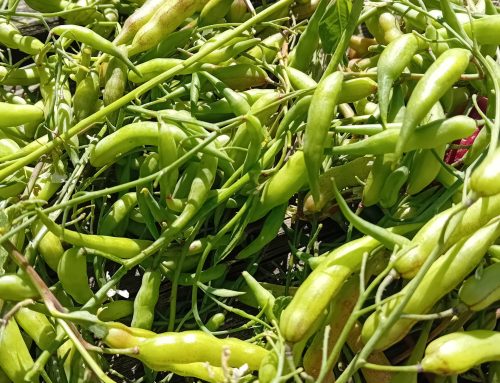
That doesn’t mean I won’t grow certain crops again. It just means I’ll be changing how I grow or perhaps growing much less of it. An example is that this year radishes didn’t do well after May. They went to seed but the radish pods provided a great crop, which I was able to use in various meals.
What would I change?
This is probably the most useful part of an end-of-season review. It’s easy to look back and focus on what went well, but the failures often teach us more.
I successionally sow crops and this has helped me adapt during the season.
It’s tempting to do most of the planting in spring and then sit back and watch everything grow. However, if the goal is to produce food for as much of the year as possible, we need to think beyond one harvest. Examples re that I plant potatoes every 2 weeks into September, grow spring crops like pak choi and spring onion again in late summer, and have 3 sowings of carrots and beetroot. I have learned to do this over the year by reviewing and changing what I do.
I also grow in various areas of the garden. I replace something every time I get a space. I learned to do this over the years. I also move things if they do not do well in a certain area. I moved my grape vine and some rhubarb for this year which worked well. It is important to get to know your garden, where the light and shade is, any pests, or where the wind blows. This year I netted more crops due to the pigeons ravishing some last year. Another year I moved some away from an area that got lots of slugs and planted in raised boxes there.
The other lesson is not to plant more simply because there is space.
More plants don’t necessarily mean more useful food. A smaller number of productive crops that we eat regularly is probably much more valuable to us than a garden full of interesting vegetables that end up being ignored. I tend to plant herbs in spaces if I don’t have another crop to grow. This way I can dry them for seasoning and some also protect my crops from predators.

What did we actually eat?
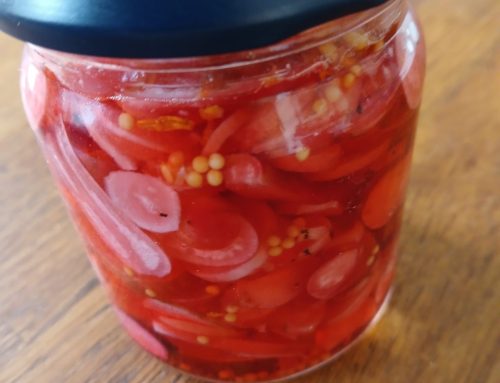
The ultimate test of a food garden isn’t how impressive it looks. It’s how much of the harvest ends up on our plates. Some crops like strawberries disappeared almost as quickly as they were picked, especially if my grandson was around.. Others were harvested enthusiastically but then I had to find ways to preserve them. Nothing was wasted. I didn’t make many jams or chutneys as we already have lots. We did make piccalilli, chilli sauce, sweet chilli sauce, and caramelised onion chutney.
With the tomatoes I concentrated on sauces, salsa, puree, and ketchup. The beans were frozen or dried.. The fruit was water bathed as compote, stored in boxes, or frozen. Pot These are all things that we eat all of the time. potatoes were stored in boxes, and winter squashes were stored on shelves. Most other things were eaten throughout the season, or frozen in small quantities.

The space question
Growing the food is only half the job. One of the biggest challenges of trying to grow a lot of our own food in a suburban garden is simply space.
There are only so many raised beds, buckets, and a tiny bit of ground as the garden is paved with Yorkshire stone. Over the years my productivity has increased as we have built raised boxes, built trellises, grown in the front garden, and planted things more closely together as companion plants.. i am growing more perennial plants like Jerusalem artichoke as well, and splitting or taking cuttings from others. If something can provide food year after year without needing to be started from seed every spring, that’s a very attractive proposition when you’re trying to reduce both work and reliance on the shops.
What I want to try next year
Of course, the end of one growing season is also the beginning of next year’s gardening plans.
There are already several things I’d like to try.
I’d like to grow next year because we use so much of it. One is sweet potatoes which were a fail this year. We eat quite a lot of these and have to buy them. My ginger grew for the first time this year, though. I also want to grow more strawberries as my grandson ate a lot of them.
The only new thing I want to try is a fig tree. I have tried most other things. The grapes were new this year and the Amaranth that self seeded this year, was new last year, as was Jerusalem artichokes. I always try to try new varieties from Real Seeds, and save the heritage seeds for the following year. I have saved a lot more seeds this year which makes me feel more self sustainable and will save me money.
There are also the ideas that I keep writing down even though I’m not entirely sure where I’m going to fit them, or how. I do want to grow more winter squash but they take a lot of room. They were growing up my woodshed and compost bin this year. That’s the problem with gardening.
The garden is never finished.
The bigger picture
When we started trying to grow more of our own food, I think I imagined self-sufficiency as a destination. You grow enough vegetables, save enough seeds, preserve enough food and eventually you reach the point where you don’t need the shops anymore.
A suburban garden isn’t going to provide everything we need. It doesn’t have to, though we adapt what we eat so that it provides a lot..
If it can provide a meaningful proportion of the vegetables, fruit, herbs and other food we eat — and teach us how to grow, store and preserve more of it each year, then I think we’re heading in the right direction.

So, would I do it all again?
As I get older I tell myself that I will grow less as it is very hard work. I don’t because of the talk of food shortages, and the rising prices. I will always absolutely keep growing though.
Even the failures, actually, especially the failures. This time next year I’ll have forgotten most of the things that went wrong this season, convinced that this be the year when everything works perfectly.
That’s probably exactly how it should be. For now, I’m enjoying the quieter garden, making notes, clearing beds, and saving what I can. After Christmas I will have started to dream about next year’s crops, and be checking the seed catalogues, and what I can save and swap. For now I will write in my gardening exercise book a review of this year. My old brain will have forgotten by Halloween. It has been a hard, but really good growing year. I am not looking forward to the water bill, though. I already have 5 water butts but they soon emptied this year. Maybe it is time to look for an extra one. How has your growing season gone?


Do you eat or preserve your amaranth leaves? I am trying Pink Beauty amaranth this year.