
The price of food continues to go up. The television and newspapers tell us that there will be food shortages this year and into next year. However, don’t despair. There is so much free food out there waiting to be picked. Food with no chemicals, no additives, and competely natural. If you have never foraged before, may I suggest you make this the first year, and start learning now.

I hear the excuse that people don’t have enough knowledge, and are scared of poisoning themselves. I was the same. However, I started with what I already knew. My first year, I found one apple tree along the canal, and some blackberries on the moor. I got about 15 apples and a couple of tubs of blackberries. It doesn’t sound a lot but I froze them and it gave us a number of lovely puddings that brought us joy the next winter, and cost virtually nothing.
The next Spring, I started looking for things that had blossom on as we went for our daily walks. I also started researching the leaves and blossom of the trees I found, to identify what they were. That year I found 4 more apple trees, some cherry trees, and some elderflowers. I added elderflower cordial, a sour cherry pie, and lots more apple and blackberry recipes to our menu. We even made cider.

Now, I try to learn 3 new things to forage every year, recipes, and the nutritional benefits of them. Half of them I don’t bother picking as I don’t particularly like the taste of them. However, if food becomes scarce, I will have a source of nutrients. I just stick to things that I can use easily, we like, and are easy to identify.
Here are the foods that I forage regularly.
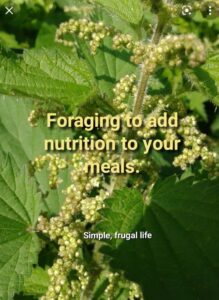
Nettles. High in calcium, vitamin C, and iron and can be used like spinach. I put them in soups, teas and pesto, and dehydrate the seeds and put them in bread.
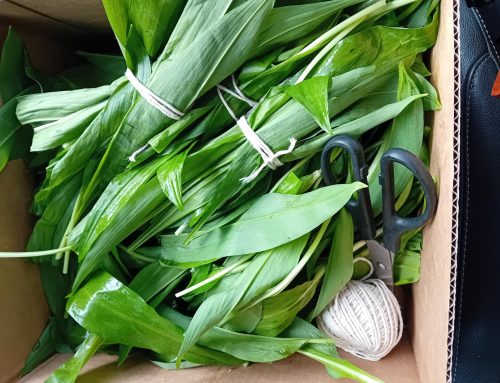
Wild Garlic or 3 cornered leek. These add flavour to my food when onions are scarce, and are antibacterial. I make many recipes with them including hummus and pesto.
Dandelions. I don’t use these often and only pick them from my garden. They are full of vitamin K and A. Apparently you can make coffee from the roots and they make nice wine. I have made tea and honey with the flowers, and do add an odd leaf to salad.
Cleavers to steep in water to give my lymph system a good spring clean. I pick these every spring.
Berries. These include blackberries, wild raspberries, elderberries, hawthorn, and bilberries. I use hawthorns in tea and ketchup as they are good for the heart. Elderberries need cooking and I make a syrup that is good for immune health. Bilberries, raspberries, and blackberries go in pies, jam, or compote. The latter are full of vitamin C and antioxidants. Blackberries also have protein and omega 3.

Other Fruit.
We have found wild cherry, apples, crab apple, and pear trees locally. These all add fibre, vitamin C, and variety to our diet. We also pick rosehips for syrup.
Seeds and nuts
We often find hazlenuts, and sometimes chestnuts or black walnuts if in a diferent area. As a kid I used to regularly eat beech nuts when hungry. I pick dock seeds to make flour to use sometimes when making bread, and dehydrate nettle seeds to add to bread and flapjack.

We also pick horse chesnuts every few years to dry and use for laundry soap.
Mushrooms.
I am not confident picking mushrooms, even though I can identify quite a few now. Puff balls, chicken of the woods, and penny buns are the only ones that I would forage and eat. I do pick king Alfred’s cakes as fire starters, and birch polypore to make plasters for wounds.
I bet that you could identify a lot of these now without needing to do much research. With all plants, fruit, and mushrooms, it is important that you don’t consume anything that you are not really sure about. Also if you are on medication it is best to check with a gp or pharmacist before you consume anything new. We never pick by roadsides where there is polution, or places where people walk their dogs. Nothing should be uprooted, and lots should be left for the wildlife, or for new growth next year. If we are picking things like wild garlic, we will only pick a few leaves off each plant. When foraging on private land, it is best to get permission.
We preserve items we have foraged by drying, freezing, making syrups and cordials, making jams and sauces, and fermenting. I wrap apples in newspaper and keep them in a box in a cool place. The peels and cores when used make apple cider vinegar.

I don’t find it helpful to try to forage everything each year. We usually pick some items every other year like elderflowers or rosehips. With what we grow, we usually have enough nutrition by just focussing on a small reliable core of foraged ingredients. Some years it is just blackberries, apples, and wild garlic, that we pick, if we have a good growing season. The most important things to us, are that we really like what we forage, they are abundant and easy to find, they add variety to our meals, and they are nutrient dense. Foraging to us is not a hobby. It is a way of life that saves us money, is fun, and adds variety and nutrition to our meals. What do you forage, or are you going to start this year?



I’m lucky enough to have brambles growing in the grounds where I work, I pick and freeze them every year and my son uses them in his smoothies :-)
Great. That is lucky. We go a bit mad and fill bags and bags of them for the freezer. We get lovely jam and compote that way. It gives us a reason to go for a walk as well. I can’t believe the price of them in the supermarket.
I can remember foraging for cob nuts when I was younger. There doesn’t seem like there’s any wild ones about now but I always forage for apples, blackberries, rosehips and sloes every year. I’m hoping to learn more this year
Brilliant. We still get cob nuts here but you have to be quick before the squirrels get them.
We used to pick apples from trees not far from us but the council chopped all the trees down. I have noticed some cleavers growing in a planter out the front. If my husband hasn’t pulled it up I could try that as a drink.
A few years ago we walked where beech nuts grew but they all seemed to grow shrivelled up and I never saw any healthy ones.
I just have my eyes in a neighbours ( 2 doors away) apple tree. It is usuallyoaded with apples so hopefully she will accept something from us in exchange for some apples. We usually give her chutney, jam or whatever has grown anyway.
Aww sharing and bartering are the best way.i hopevthe Cleavers are still there.
And cultivate friends who grow things as well – swapping is very beneficial! They give you a bag of apples, you give them an apple crumble/jar of jam etc. Widens your options too. 😉 My gin is always in demand at Christmas so I’m always offered damson/sloes/gages etc.
Toni I love your blog, always inspiring, thank you.
Thanks. Yes community is important, more so now, I think