
I think that the secret to a simple, more frugal life is buying less stuff to solve problems that weren’t really problems in the first place. Have you ever bought something that promised to make life easier, only to discover that it wasn’t particularly useful? I know that I have lots of gadgets in my kitchen bought in the past that would supposedly save me time, and transform the way I cook. They sit in a kitchen cupboard now gathering dust whilst I try to sell them.
Maybe it is a set of beautiful storage boxes that promise to organise your home. Perhaps it was a specialist cleaning product, or a new diary that would help you put your life in order. I used to have a shelf of self help books that, when I read them, were just common sense things that I knew about any way.
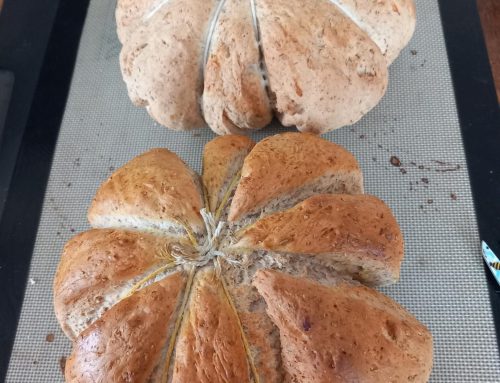
I bet you bought the items with good intentions and they felt a sensible purchase at the time. A few weeks later and they haven’t been used. We did it recently with a cast iron bread baking pot that was part of our Christmas present to each other. I adore the look of it, and hopefully I will at some point be able to make bread with it in the future on my woodburning stove. However, this morning when making bread it was easier to do it in the tins that I usually bake it in. Does any of this sound familiar?
Recently I have been thinking about how much of people’s every day spending is driven by problems that they don’t actually have. More accurately, problems that we were not really aware of until somebody convinced us there was a product to fix them. I visited a shopping out let this week and it was filled with endless products promising to solve most of my Christmas problems, and improve different aspects of my life. There were containers to organise cupboards, gadgets to simplify every kitchen task, and to tackle every tiny household inconvenience. Luckily, I wasn’t tempted, I have been managing just fine without them. Recycled glass jars are used to organise my cupboards, and I know the gadgets will probably be rarely used.
Of course some of these things are genuinely useful. My ‘Karcher’ window vacuum stops my house going mouldy, and our electric throw keeps Mr S warm when we can not afford to put the heating on. Our mincer/sausage maker gets used only about 3 times a year. However, it means that we can buy joints of meat when they are half price and process them. This saves us money each year. We lend it out to family and it helps them as well. I do believe, though, that somewhere along the line we have become accustomed to thinking that every little inconvenience needs a purchase.
I even saw someone the other day that had bought an electric window cleaner. For a second I thought about buying one. They were a hundred pounds or more. I am sure that they help her as she is a carer and has a lot on her plate, but I don’t need one. My ‘Karcher’ window vacuum, or vinegar and newspaper, clean my inside windows. Outside the hosepipe with it’s extended fitting does the windows. It just takes a bit more effort. My grandson loves helping to clean the windows, and we have such fun. Why did I spend 20 minutes thinking and looking up the window gadget on line to see how much it was? The marketing was persuading me that I needed one to save money on window cleaners, when I don’t use them anyway. I am also trying to buy things that don’t need electricity.

I don’t think that the answer is always another purchase. Sometimes it is simply using what we already have, and accepting that every day life doesn’t have to be perfect or look like an Instagram page. Most people’s cupboards are already probably full of solutions. One of the best places to start looking for unnecessary spending is in our homes. How many products have you bought over the years that promised to solve a particular problem? Do you use many regularly? I know that I never use my dehydrator as the sun dries it for free. I have a gadget that chops vegetables but never bother to look for it in the cupboard. It is quicker just to use my knife. I love chopping as well, it is cathartic, and gives me time to think when I am cooking.
If you take a walk in a supermarket you will see a whole aisle of cleaning products, and specialist sprays and wipes for different surfaces, and different rooms. Yet you can easily make your own cheaper, or manage on a much smaller selection. Clever marketing has a way of creating needs ,and making our lives feel like they are lacking. Social media makes us more vulnerable as well. We only have to mention something and the algorithm bombards us with adverts and content creators who make us start feeling that we are missing something. However, we are comparing our ordinary homes with carefully selected photographs. Our homes don’t need to be like show rooms. They just need to be comfortable and reflect us as people.
I definitely don’t think that frugal living should mean never buying anything enjoyable or useful. It is about making more thoughtful decisions and spending money on thing that genuinely bring us joy or improve our lives. I bought some pyjamas last week. I have always wanted some warm tartan ones to wear at Christmas.
Previously my night wear was a few pairs of supermarket PJ bottoms, and a couple of old T shirts. I can’t tell you how much joy I have had wearing them this week. They were reduced to £20 in a sale, which could have been seen as a waste of money as I have night wear that I can use. However, those PJs have already been worth the money in terms of feel good points, and they will be useful if I ever have to go to hospital. Was I taken in by the Christmas marketing? Maybe. However, I made a thoughtful decision before making the purchase.
Questions I asked myself.
Did I have a problem before I bought the product? No in my case I didn’t but I have been invited to stay at someone’s house overnight and I was feeling a bit embarrassed about what I would be wearing for bed. We also have a family holiday away soon and I always get the micky taken out of my same old PJs which I wore on family holidays when the children were young. It is also future proofing myself as I age in case I end up in hospital.
Can I solve this with something I already own? In this case I couldn’t. If it had been a gadget or a storage system the answer could have been yes.
Will this make my life easier or better, or will it just give me another thing to look after? Every possession needs storing, cleaning, maintaining, and eventually replacing. Is the convenience worth the extra responsibility? I decluttered a pair of my PJs to make room for these in my drawer. The old pair will now become cleaning rags.
Will I be using it in six months? It is easy to get excited about a new purchase, but it is important to imagine whether it will be useful when the novelty wears off. My PJs feel so luxurious and will never go out of fashion. They are also lovely and warm as they are good quality. They will last well and be enjoyed every winter.
What would happen if I simply didn’t buy it? Would anything really change? Would the inconvenience be significant, or would I barely notice? Sometimes we have to walk away and see whether we miss an item. I did this for about 4 years with the PJs. To be honest, I didn’t really miss them and managed without them, but each year I did wish that I had some. I therefore feel that they passed this test.
Next month I will be doing what I usually do when I think about buying something in the sales before and after Christmas. I will ask myself these questions.

What problem will it solve?
Why do I think that I need it?
Do I own something that can already do the job?
What impact will it have if I don’t buy it?
I will then look back at the end of January and ask myself how many of the things that I was tempted to buy do I still want. How many problems have I solved without buying the item or spending a penny? I don’t do this to deny myself the things that I genuinely need. It does help me not make unnecessary purchases out of habit, though. A simpler life doesn’t need so many solutions and I think there is something quite liberating about breaking free from consumerism.
Mr S and I talk about all of our purchases before buying so that the other person can share their point of view, or offer a solution. Frugal living isn’t about finding cheaper ways to buy things that we want. It is about choices about what we can comfortably do without, and saving money in some areas so that we can afford the things that will add joy and meaning to our lives.
I like to think that if we spend less time looking for things to make our lives better, we will look at what we already have and appreciate it. After all. the money we don’t need to spend on unnecessary solutions is money we can keep for things that genuinely matter. Maybe the best purchase is sometimes the one that we decide not to make.
Right, now I am feeling guilty for not using the new bread baking pot but it is too late to take it back. I am therefore going to take it out of it’s box and make a spicy fruit loaf in it this week. Hopefully once I have use it and got over the fear of learning to use something new, I will enjoy it. I bought it initially to cook with on my woodburning stove in case we have black outs and so I do need to learn now so that I am not doing it in an emergency. None of us are perfect or impervious to marketing, even those of who have been frugal for a lot of years. What have you bought in the past to solve a problem that you don’t really have?

Other blogs you may find useful
13 tips for shopping in charity shops (thrift stores).
How supermarkets trick us into spending more
4 emotional blocks to overcome in order to reduce spending
Are you tracking your spending?


The bread pot will be useful in summer when you don’t have the log burner on, and it will last forever. I got a Karcher to clean my windows, ( it was very cheap for a while), but found I actually preferred my ‘soapy water and squeegee method’. I sold it for more than I paid.
That was the most sense in a blog i have read for a long,long time. Consumerism exists to make us feel dissatisfied. We can be happy with what we have and fight back!
This reminded me of the spiraliser that a friend bought, didn’t use, and gave to me (I had thought of buying one too).
I didn’t use it for a year, so to the charity shop it went!
I’ve not bought bargain clothes I like because I can recall getting rid of something similar of better quality (and I don’t want to get rid of anything enough to make room).
Last year I treated myself to a wool christmas jumper (TK Maxx). I didn’t want something acrylic/polyester. I’m really looking forward to wearing it again!