
Managing a low food budget is not easy, and takes time and planning. I seem to be spending a lot of my time preserving food at the moment. Trying to be food secure is a balance. In the past I have gone over the top, preserving too much food.
I made 17 jars of jam one year, and lots of chutney. We don’t even eat one jar a month. Now I have realised that they last a couple of years, I will preserve different fruit, different years. It is hard not to preserve as much as you can, especially when it is wild and free. I do give new preserves as presents at Christmas, though, in hampers.
However, from making those mistakes, I am now better at deciding how much to preserve and grow. I also used to over stock bought food items but manage my cupboards better now as I have more of an idea of what we eat a year.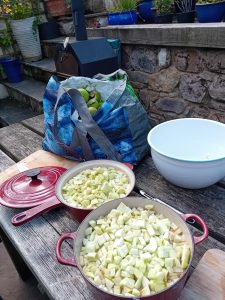
Preppers can look on line and there are various charts showing how much a person needs to survive a year. I am not a prepper, and, as I don’t do a manual job, it is more than I would need. I preserve food that I grow or forage so that I can eat well on a low income. It reduces visits to the supermarket whilst providing me with nutrition and better quality food.
I have an annual food budget of £700 this year for the 2 of us. I have increased it by £50 for 2025, due to rising prices. People ask me how I manage on that. It takes a lot of planning, preserving, foraging, growing, and a bit of maths.
First of all I grow what we like to eat, and what will be useful in meals. In order to provide lots of protein for the vegetarian meals I grew 4 different kinds of beans, and some peas. These are eaten fresh throughout the summer, and then frozen or dried. They cost too much to can (3 hour waterbath), and I don’t want to waste salt.
I can’t grow enough beans in my garden to sustain us all year, but preserve and eat as much as I can. We supplement these with two big bags each of chickpeas, beans, and lentils a year. I buy 1 of each every 6 months from the World Food aisle. We also get an odd can of lentils from the Company shop when they are selling them for 35p. They come in useful when I want to make something quickly. I buy 20 tins of cheap baked beans a year from Lidl (28p each at the moment).
We eat other vegetables seasonally as we grow them, or we freeze them. I also stock up on the 15p veg when available at Christmas and Easter, and store and preserve those. Potatoes are planted from March to September and grown in the greenhouse when the frosts are around. Salad leaves are sown every 6 to 8 weeks so that we can have a continuous supply. I buy a few pumpkins at Halloween as they are cheap, and do buy a bag of sweet potatoes about 4 or 5 times a year. Last year I had to buy some carrots, but we have had a bumper crop this year, and more have been sown.
The vegetables that we have as sides or cook in our meals are sweetcorn, potatoes, Swiss chard, spinach, pak choi, peas, beans, carrots, courgette, and beetroot, mainly. These are crops that grow well in my garden. I also grow spring onions, radish, lots of salad leaves, peppers, cucumbers and tomatoes. If vegetables can not be eaten fresh they are pickled, fermented, made into piccalilli, chutney, or just frozen.
Onions are important as they give lots of taste to food. We can’t grow quite enough onions, garlic or leeks, in the space we have, and so we buy a big net of onions each winter. Farm Foods often have them at a good price. We also got lots of shallots in the 15p veg last Christmas. Foraging wild garlic in March, and preserving it, also adds taste to our food.
Tomatoes are a staple. I have about 50 plants growing as I always sow too many. These provide us with fresh tomatoes for between 2 and 4 months of the year, and at least 12 large jars of passatta to preserve. We make tomato based sauces about once every 2 weeks, and so that will mean that I will have to buy 12 cans of tomatoes. If I can bottle more I save money buying tins. Having the home preserved passatta means that when the organic tinned tomatoes are on offer, I can bulk buy the amount that I need for the rest of the year.
A lot of our desserts each week are derived from compote. It might be in a pie, crumble, or served with yoghurt, custard, or ice cream. We therefore need lots of fruit. This year I have water bathed big jars of compote and will need 2 a week. I have only made enough for 2 months due to lack of jars and storage space. It is also my first year of doing this and so I want to make sure that it works. I grow rhubarb, strawberries, raspberries, have hedges of currants, and forage apples, pears, cherries, bilberries, blackberries, and sometimes plums and raspberries when we find them. Everything is frozen except the apples which are stored in boxes, wrapped in newspapers. Two thirds of them are cooking apples, the rest being eating apples.
We rarely buy fruit, except 4 lemons a month. I might get an odd melon if they are on offer, or an odd bag of satsumas. We do get fruit (and veg) from the waste food project sometimes, as we go there now and again in winter. It is a ‘pay as you feel’ and open to every one. This was a great help last winter and gave us more variety in our food, eg we got lots of limes. However, it is a car ride away and there is no guarantee of getting anything, and so we don’t go often.
We started making our biggest saving 2 years ago on meat. We eat 3 lots of meat a week and stretch it sometimes to make more meat based meals. I stopped buying yellow sticker meat in 2023. It was a false economy as it needed cooking straight away and wasn’t always good quality. Now we buy half price joints at Christmas and Easter and we mince, cut them into chunks, and make sausages from them. This has saved us a fortune. We have also sometimes bought whole salmon when half price and filleted and cut them into portions.
Each year we buy 10 big chicken breasts from the butcher for £18. One breast will feed us both. If we have been lucky the Company shop have provided us with broken fish fingers in bulk, big packs of bacon mishapes for 75p, an odd half priced gammon joint, and discounted prawns. All this means that we live well for little money.
Flour, pasta, and grains we buy in bulk every 6 months. Sometimes we make our own pasta or gnocchi. Bread and wraps are baked for most weeks, and so we worked out the flour we would need for that from the recipes, and multiplied it by 52. Some of it is ancient grains if I can find it on offer, the rest is cheap wholemeal or white bread flour. We also allow for a bag of plain and self raising flour a month (bought from discount supermarkets). I buy yeast from Aldi.
I supplement our flour using foraged dock seed flour, and flour made from home grown. courgettes. Hopefully, I am going to try making acorn flour this year. We have grown Amaranth and quinoa to supplement our grains. A large bag of rice is bought when it is discounted for Ramadan and it lasts us more than a year.
For drinks Mr S buys his own coffee, and diet Pepsi, when it is on offer. I make my own herbal teas and cordials. I do bulk buy one big bag of tea bags each year.
We mainly bake our own cakes and biscuits, though buy odd things discounted from The Company shop. We make some of our own snacks like pop corn, apple or potato crisps, fruit leathers etc. The rest we buy with our pocket money if we visit the Company shop.
We buy 2 pints of whole milk a week (from the milk man as it is creamier), and dilute some of it to be like semi skimmed. I have some dried milk as a back up. We make our own yoghurt, and cheese is bought discounted after Christmas, and frozen, or bought from The Company shop when discounted. If we have found discounted cream we will make butter or ice cream and freeze it. We are still cooking with olive oil bought before prices rose dramatically, or I will cook with lard, or saved fat and oil. Having the air fryer means we need very little fat.
Top Tips.
1. Shop around and only buy things if discounted.
2. Buy in bulk but check the price is cheaper.
3. Make meals, condiments, and staples like bread from scratch.
4. Meal plan and eat from what you have in.
5. Plan ahead.
6. Only buy and grow things that you really like.
7. Read world news. Mr S saved £4 a bag off his coffee and bought in bulk as I was reading that it had been a bad coffee harvest. 6 weeks later it had gone up. We still have olive oil from when it was £3 a bottle for the same reason.
8. Supplement with free food where you can. This might be foraging, an app like Olio, or ask for things like meat bones that family would waste (you can use to make stock).
9. Learn to adapt and be willing to change what you eat. Some years harvests fail, or are not as good. Bargains we have relied on may not be available. Stay flexible and think outside of the box. Substitute ingredients. I have used barley and orzo when I have run out of rice.
10. Use everything up. Don’t have any waste.
11. Visit the supermarkets or shops as little as possible, and shop with a list. It is so easy to pick up extra items.
12. Eat vegetarian as often as you can.

Managing on a low food budget is not easy but if you have the time and can be creative, you can still eat like kings. Food is one of the few areas in a household budget that it is a possible to reduce spending. What are your tips for spending less on food?


Great post toni ,very inspirational, not sure I have time for all you do but certainly some ideas I can take from this thank you
No worries, thanks
This is so interesting, thank you. You are fortunate to have access to Asian shops etc, i live in a shopping desert in comparison! I remember the shops in Bradford and Leeds with fondness. Thank you for all your information, very generously given. I have learned so much from you and my eating has changed for the better
I actually don’t visit Asian shops. It is too difficult to park and drive to them.I buy from the Tesco World food aisle when they have offers on for Ramadan. Thanks for your lovely feed back.
Wow! That’s less than £1 a day each and a lot of work. A few years ago, I did the live-below-the-line challenge (£7 for food for 7 days) and it took a lot of planning and work but I managed to eat reasonably nutritious meals. Foraging some apples and brambles helped. I was still really glad when it was over. The 7 days was limiting – I did think I might have found £30 for 30 days easier. It occurs to me that what you’re doing is living the way many of our grandparents and previous generations lived. Well done you!
Thanks. Yes I have taken a lot of inspiration from World War 2 leaflets and articles, and the Armish. We have done the changes over years and so not really noticed them to be honest.
Great post Toni, it’s always interesting how others manage food stores and shopping. I also use the Company shop and buy the meat from the supermarkets when it’s cheaper at Christmas. We have two non meat days and a fish day each week, husband likes his meat so this is a fair compromise. Lots of ideas to take away x
Mr S used to like a lot of meat but we have slowly reduced it. Having no meat days definitely helps
What about alcohol Toni? I buy 3 bottles of wine a week from Lidl and spend a fortune on pet food for our 2 cats and 1 dog. That’s at least £30 for the pets and £12 on wine, before anything else. Any wonder I can’t save money!!
We don’t really drink alcohol regularly. Only special occassions a couple of times a year. We have our home made cider from foraged apples. I also make blackberry vodka or gin for Christmas presents and there is often some of that left
This is brilliant! Thank you so much. I have read so many articles that headed towards disaster prepping and didnt actually tell me anything. This is brilliant and is so informative. I now have the confidence to try everything. Thank you
No worries. Thanks for commenting
Thank you Toni for yet another informative blog. Although I’ve been following your posts for a while, I’ve just started to put the advice into practice
We’ve just learnt to grow microgreens, that’s our fresh salad. So far great success with Radish and also brocolli.
I’ve been sprouting lentils and pea shoots etc for years but I’m really impressed with these microgreens.
You are such an inspiration! I aspire to be like this, but while my two (adult) children are at home, we go through so much cheese – it’s a whole food group on its own here! I am going to take some of these things on board and build up gradually, over a few years. No yellow sticker shopping is first!
We buy lots of Christmas cheese in the January sales and freeze it. So much money is saved this way. Teenagers do eat so much 😊
Thank you Toni for sharing all these tips. It’s very interesting and I hope to have a lot more time spare next year to work on reducing my food budget even more, whilst still eating healthily and with variety.
It does take a lot of time. I hope having that extra time helps
Really helpful post. I will have a go at looking at a yearly budget- I’ve been working on a shorter scale. It makes a lot of sense to do the sums!
I find it better not to have a weekly or monthly budget. If I had ene I would spend it. By having an annual budget I spend as little as possible
Thanking uou Toni, always love your articles, really cant wait to retire and put a lot more into practice. I do quite a lot of batch cooking, and buy yellow stickers fruit for my fruit and vegetable smoothies. I make 5 day’s worth at a time. Shop about for the cheapest beetroot, celery, etc as cant always get stuff on yellow stickers. But I definitely have reduced my food bill by going every 10 days roughly now. Also been bulk buying on pet food and other things. I get my rolls from the community waste, they are donated from tge bakery,and hardly use additives etc, I also pick up there sour dough bread and freeze it, and only eat it at the weekends now anyways. I just put a couple of pound in the donations box. Thanks for sharing 👍 😊 X
Some brilliant strategies there. Thanks for sharing
Morrisons savers beans 26p . They give back £2 in points for £9 spend in tins – kidney beans 31p . Everup gives back 4.4% cb on a Morrison’s gift card . A few more pennies to the budget !
We don’t have a Morrisons near by but that sounds like a good thing to know. Thanks
Hi Toni, How do you storage flour and grains so it doesn’t get infected with flour moth?
This is so inspiring and interesting. I have started to adopt bits of your routine for my family. I grew potatoes this summer. It was so easy I will do it again…I didn’t know about having them in the greenhouse, so will try thar this year. Any specific type for winter growing, I wonder?
Wow Toni you are an inspiration to us all, I couldn’t do all that you do but am very appreciative of these great ideas and will certainly be doing more of them xx
Brilliant. Thanks for your lovely feedback
I’d never thought about having an annual budget but your comment about when you’ve a weekly or monthly figure is can sometimes feel like its a target. By that I mean if I’ve a £50 week budget I look to buy extra things to make up the value on those weeks when I need less, whereas I think perhaps I’d be less inclined if it was a yearly figure. I think I shall investigate this approach. I also think there is huge merit in your logic about really understanding how much of an item you actually do use in a year etc. I’m definitely going to give this some thought on the long life stuff. I’ve always done this with jars of coffee but I’m now thinking stuff like tins of beans etc when on offer. Really appreciate the ideas you so willingly share. great article
It is amazing how careful you are with it at the beginning of the year (except January bargains). It has really helped me stop buying things I don’t need and definitely stopped me wasting any scrap of good.
Thank you Toni. A lot here to learn from and aspire to.
Best wishes, Helen
Aww thanks for your lovely feed back
This is really interesting, there’s a few things I can and should be doing, although others we’re limited on as we can’t do dairy – I’ve tried making oat milk but it’s not the same!
Oat milk making is a skill. You haave to whiz it just the right amount of time. It is great for an emergency, though.
Really good advice Toni, I’m not sure I could be so disciplined but I’m going to take a lot of what you do on board and have a more serious look at my food money outgoings. My daughter took my allotment over last year and I grow in my my back garden now, I’ve been quite successful this year and hopefully next year will be even more so, and I’ve also started looking into foraging and found cherries, sloes, blackberries and crab apples! I thought I’d found a hazelnut tree but they all seemed to disappear overnight!!! and now I’m keeping my eyes on a chestnut tree!!!!
You are an inspiration!
Brilliant. That is a great way to learn, a few extra steps each year.That is how I did it.