
I reached into my hessian onion sack yesterday and found 3 stored onions that had started sprouting. Instead of throwing them away and feeling disappointed, I plant them as a source of tasty food, pollinating flowers, and free seeds. A sprouting onion can provide delicious green onion tops for your meals and, with a little patience, beautiful flowers that produce seeds for future crops.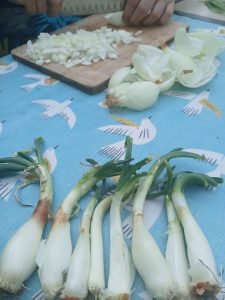
Why Plant a Sprouting Onion?
When an onion begins to sprout, it is simply trying to continue its life cycle. By planting it in your garden or a container, you can make the most of what might otherwise become food waste. The plant will produce fresh green leaves that can be harvested and used like spring onions, and eventually it may flower and produce seeds.
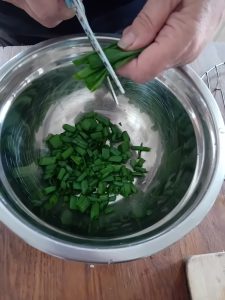
How to Plant a Sprouting Onion
Planting a sprouted onion is easy. I have a couple of dedicated old toy crates that I call my onion graveyard. They are in a sunny location in my garden with holes in the botto. For good drainage. Any pot will do. Some people plant the whole onion. I like to use every scrap of food. If the bulb is not too soft, I usually peel off all of the outer layers, and plant the green sprout, making sure there is some root attached. Sometimes I will get 2 or 3 separate sprouts from one onion.
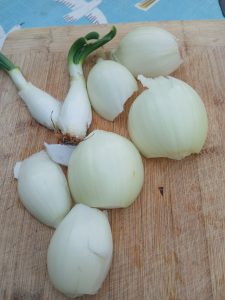
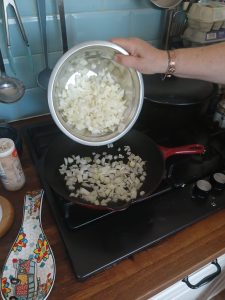
The discarded layers can then be chopped and frozen, or used in a meal. Sometimes I will fry them, put them in the fridge cooked, and then use them in my meal plan that week with a burger, in a sausage sandwich, or maybe with chicken fajitas. You can see from the picture that a lot of usable onion would have been wasted if I had just planted them.
When planting the sprout, I place the onion in the soil with the sprouting end pointing upward.. The sprout or bulb is covered with soil lightly, leaving the green sprout exposed. You don’t need a lot of space. Mine are planted close together in old compost.
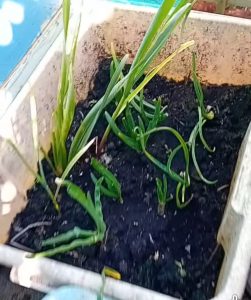
These are kept watered, consistantly like the rest of my crops, but don’t let them become waterlogged. Within a few weeks, the onion will establish roots and begin producing vigorous green growth.
Harvesting the Green Tips
One of the biggest benefits of planting sprouting onions is the steady supply of fresh greens. The tender green leaves can be snipped as needed and added to: salads, soups, stir-fries, omelettes, or baked potatoes, etc.

When harvesting, avoid removing more than one-third of the foliage at a time. This allows the plant to continue growing strongly.
Encouraging Flowers and Seeds
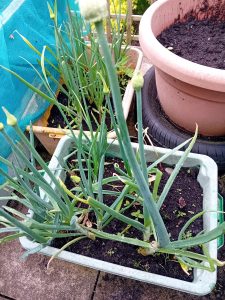
Onions are biennial plants, meaning they typically produce flowers in their second year. However, a mature onion bulb that has already been through storage often has enough energy to flower after planting.
As the plant grows, it may send up a tall flower stalk topped with a round cluster of tiny white flowers. These blooms are attractive to pollinators and beneficial insects.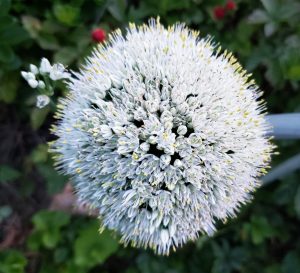
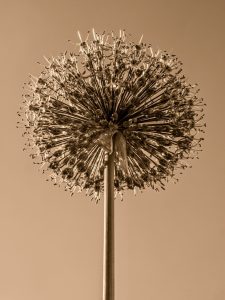
Once the flowers fade, seed heads begin to develop. Allow them to dry on the plant until the seeds turn black and mature.
Collecting Onion Seeds
When the seed heads are dry:
- Cut the flower stalk.
- Place the seed head in a paper bag.
- Allow it to dry for another week or two indoors.
- Rub the seed head gently to release the seeds.
- Store the seeds in a cool, dry place in a labeled envelope.
Fresh onion seeds can be planted the following season to grow a new generation of onions.
A Sustainable Gardening Habit
Planting sprouting onions is a simple way to reduce kitchen waste while increasing your food production. You get fresh green onion tops for cooking, beautiful flowers for pollinators, and seeds that can be saved for future harvests. It’s a small gardening project that delivers multiple rewards from a single onion that most people throw away.
The next time you discover a sprouting onion in your pantry, please don’t toss it out. Plant it, and enjoy the journey from kitchen scrap to homegrown food, beautiful flowers, to useful seed.


Can you use the saved onion seeds as a spice? At the back of my mind is something about them being called something else….think they can be added to bread too
You can but it is blackvonion seeds, or I think they are called Nigella seeds that are used usually. These will be a lot milder
Excellent information. Notes taken! Thank you
Aww thank you
Thank you Toni for this information. I will certainly be doing this from now on. I only have a small patio to grow things on and this will be ideal.
Brilliant. The flowers are beautiful as well.
Great idea, Toni. I will do this from now on!
Great. Free food!
I didn’t realise you could do this! I’ll be having a go at this as I grow onons in the garden but you can never have too much ‘oniony’ flavouring. Thank you.
Absolutely. For me they grew just as my wild garlic ends and means that I don’t need to grow as many spring onioons.