
There seems to be a lot of frightening news at the moment and it is hard to avoid it. Every day the news is worrying, with very few positive stories. This obviously can impact our mental health. I don’t listen to main stream media, or watch television, but it is still creeping into my life through conversations and social media.
Energy prices are going up. We are being encouraged to keep extra food and water at home. There are stories about possible blackouts, devastating weather, food shortages, international tensions and the frightening possibility of war.
It is very easy to spend a few minutes reading or listening to the news and suddenly feel as though the whole world is about to fall apart. If you have been feeling anxious, unsettled or simply fed up with it all, I want to offer you a little reminder:
You do not have to carry the weight of every possible future problem today.

Prepared doesn’t have to mean frightened
There is nothing wrong with being sensible.
Having a few extra tins in the cupboard makes good sense.
Keeping a torch where you can find it saves stress.
Having some food that doesn’t need refrigerating or cooking is being organised.
Knowing where your candles, blankets, and batteries are is sensible.
But there is a huge difference between quietly preparing for the possibility of an inconvenience, and living every day as though disaster is already happening.
One can make you feel secure. The other can rob you of your peace.
For those of us who enjoy a simple, frugal life, I think there is a lovely middle ground. We can prepare without panicking.
Look at what you already have
One of the wonderful things about a frugal home is that you may already be more prepared than you realise.
Your cupboards probably contain rice, pasta, flour, oats, beans, tinned tomatoes, soup, cereal or other foods that will keep for a long time.
You may have a full freezer or dehydrated items..
You may grow a few vegetables.
Perhaps you have blankets tucked away, a camping stove, a torch, candles, a flask or a battery pack.
Maybe you have a little store cupboard simply because you like shopping less often and making your money stretch further.
That’s not “panic buying”. That’s simply being organised.
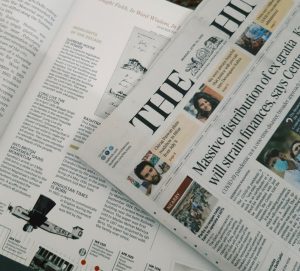
You don’t need to rush out and spend £200 filling your cupboards because a newspaper headline frightened you.
Use what you have. Rotate it. Replace things as you use them. Build your supplies slowly and naturally.
That is the frugal way.
Don’t let the news decide how you feel
This is something I think we all need to remember.
News organisations have a job to do. They need people to click, read, watch and come back tomorrow.
“Everything is fairly normal today” isn’t much of a headline.
“Could your home survive the next crisis?” certainly gets our attention.
The result is that we can spend far more time thinking about frightening possibilities than we do thinking about all the ordinary things that are going right.
So perhaps give yourself permission to step away.
You don’t need to know every development.
Many predictions are exaggerated or false, any way.
You definitely don’t need to scroll through social media before bed.
Choose a reliable source for important information, check it occasionally, and then get on with your life.
There is a difference between being informed and being consumed by information.
Come back to what you can control
When the world feels enormous and uncertain, bring your attention back to your own little corner of it.
Make a cup of tea.
Cook something from the cupboard.
Bake some bread.
Sort out the freezer.
Put £5 into your savings pot.
Hang the washing outside if the weather allows.
Plant some seeds. There is still time for some winter crops.
Take the dog for a walk.
Phone someone you love.
Have a tidy-up or a declutter.
Read a book.
Light the fire.
Sit in the garden.
Make plans for something lovely.
These things may sound very small when there are enormous problems happening elsewhere in the world.
But small things are not meaningless.
Small things are where our lives actually happen.

Frugality can be a form of resilience
Perhaps this is one of the reasons I love simple living so much.
Frugality teaches us not to waste.
It teaches us to make do.
Frugality teaches us to cook from what we have, mend things, reuse things, grow things, save things and think ahead.
It teaches us that we don’t necessarily need to rush out and buy something every time we are told we might need it. Perhaps most importantly, it teaches us that we can live quite happily with less.
So if energy prices are worrying you, look at the things you can change.
Could you reduce wasted energy? An example is putting a cup full of water in the kettle instead of filling it before you make your cup of tea.
Maybe you can make a couple of inexpensive or meat free meals each week? I sometimes cook in my pizza oven, on top of my wood burner, or firepit to save money
You could you use up the food already sitting in your cupboards. Maybe you could do a freezer or cupboard inventory. |I bet you have more food than you actually think.
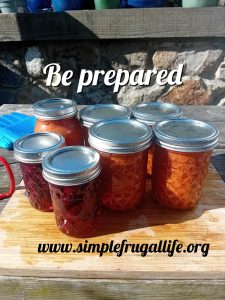
Could you start a small emergency fund, even if it is only a few pounds at a time? If you don’t have much in the pantry you could just spend £3 a week extra by buying things like oats and pasta, baked beans, tins of tomatoes, flour, etc.
Maybe you could make your home a little more efficient or insulated? Something like a blanket at the back of the door, turning the heating down by a couple of degrees, or pulling plugs out.
Small changes really add up over time.
You don’t need to solve the world’s problems.
You only need to make your own household a little stronger.
And what if something really does happen?
That’s a reasonable question.
We cannot know what the future will bring.
There could be storms, power cuts, supply problems, price rises or other unexpected events. The government is now encouraging households to take some straightforward steps to be better prepared for disruption.
Being prepared doesn’t mean sitting at home worrying about everything that might happen. It means quietly thinking:
“What would make life a little easier if something went wrong?”
Then doing what you reasonably can.
Make sure you have a torch. some drinking water, a few days of food you normally eat anyway.
Check that you have some basic first-aid supplies, may be a little cash, and important telephone numbers written down.
Nothing dramatic or frightening. Just common sense.
Once you’ve done what you reasonably can, you are allowed to carry on living.
Don’t postpone your life
This is perhaps the loudest thing that I want to say.
Please don’t let frightening headlines steal today’s happiness.
Don’t put off that nice day out with your friends.
Still make your plans.
Keep laughing with your family.
Don’t stop looking forward to Christmas, your holiday, your garden, your next walk or that little project you’ve been meaning to start.
There is no point spending every evening imagining the worst possible future.
We have always lived in uncertain times.
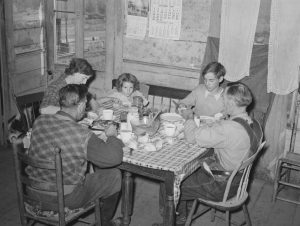
Our parents and grandparents experienced wars, recessions, shortages, strikes, power cuts, political upheaval and frightening headlines of their own.
People still baked cakes.
They also grew vegetables.
Many fell in love, got married, and had babies
They sat around kitchen tables eating meals together.
Birthdays were celebrated
They laughed.
Despite shortages they still made Christmas dinner.
People carried on. Perhaps that is the quiet lesson we can take from them.
We don’t need certainty in order to enjoy an ordinary day.
So, take a breath
If the news has left you feeling overwhelmed this week, turn it off for a little while.
Look around your home.
Realise what you already have.
Make a sensible plan for anything that genuinely concerns you and then put the kettle on.
Cook dinner.
Give someone a hug.
Go outside.
Watch the sunset.
Do something that makes you smile.
We can be sensible without being scared.
Preparation will be better without panic.
We can be frugal without feeling deprived.
Acknowledging that the world has problems without allowing those problems to take every bit of joy from our own little lives is maybe a new skill that we all need to learn.
The future will arrive one day at a time.
Today is here now. It is yours to enjoy.



A really good read, ive definitely limited my news watching it does affect my mood. Im pretty stocked up on stuff, but definitely wont let it all become overwhelming and affect me! I must buy some long life milks though I do use them occasionally when I run out and fo find that a good backup item,also good for my camping trips. Thanks for sharing Toni 👍 😀 x
A great post. So true that people have always faced uncertainty brought about natural disasters and wars etc. it brought home to me growing up in Northern Ireland during the troubles. As a child I was aware bad, scarey things were happening around me but as a family we still found time to celebrate birthdays, Christmas etc and also enjoyed the company and laughter of friends and relatives popping into the house.
Our parents would have protected us us from their financial worries and worries on the impact of the scarey political situation we lived through. People are resilient to whatever is thrown at them and being prepared is a sensible thing to do to make life easier and more comfortable.
An interesting post, thank you. I think we are prepared as much as we can be. There has always been worrying times and I remember the late 60s all the talk of war and it kept me awake worrying about it. My husband watches the news and if he doesn’t I know that is because there is something on it that he knows will worry me, that worries me more.
A really interesting post, I have limited most news channels and just have one or two blogs that I follow. Most of my close friends have the same mindset as myself. As they used to say “ keep calm and carry on” I have a store cupboard and we check on basics like candles, heating supplies, tinned food and water once a month. I think more and more people are becoming aware of the need to keep a small stock to one side and not always for the attention grabbing headlines, sometimes just a tight month money wise.
Thank you for being the calm in this crazy world.
Wise words…thank you x
In the UK, what are some examples of food that does not require cooking?
Barb
An interesting blog, thank you. I think most of us probably have a stock of tinned foods etc, if only to try to combat price rises, it would be surprising if tinned foods got cheaper. It’s probably a good idea to have some tins, such as tuna, etc, that don’t need cooking in case of power cuts. I would only add that we just have to look at what happened during covid to see that a scared population is easily managed, worth bearing in mind when the bad news from above seems unrelenting.
Thank you Toni. I only watch national and local news once a day, but I am seriously considering even stopping this. All your tips are excellent as always! 😊
There are always people who won’t prepare and there are always people who will. Those of us who do prepare aren’t only helping ourselves or preparing to help our families, we are helping those who don’t/wont can’t prepare : if there are unforeseen emergencies ( like heavy snowfall for instance ), the shops only have to supply the unprepared and that will be a lot less than supplying everyone ! We may have to get to work, but we won’t be taking unnecessary trips to shop…so reducing the risk of accidents and avoiding pressure on hospitals. So,some of it is being responsible citizens.
And now I’m going to ride a hobby horse : we need to be selective about the news outlets we subscribe to. There are a few news outlets which misrepresent news so much they’re propaganda, not news and in particular, the weather warnings they give are beyond panic inducing- they could provoke alarm and if we believed them, we’d never go beyond our own front doors! Sometimes, we have to believe the evidence of our own eyes….
A calm and reasonable approach with lots of excellent tips about what we can fo to make a small but significant difference when it comes to both preparation and quality of life. I shall be saving this to refer back to. Thanks Toni.
Some wise words here Toni