
This is the response I always get when I keep telling people to build a pantry and prepare. However, I believe that we are taking our food security for granted? At last the government are also sending the same message, though they only tell us to only stock enough food for a few days. I get told that I am a conspiracy theorist, the supermarket shelves are full, and electricity has always been fine. Let me make it clear, my predictions are not about the end of the world. I am not suggesting that we all rush out and start panic buying.
I built my pantry by spending £3 a week extra for one or two years. However, I am suggesting that this winter MI5 are warning about cyber attacks, and there are enough pressures on our food, farming, energy and supply systems to make a little preparation very sensible indeed.
A number of months back people that I knew started listening. Some, including my youngest, bought a few extra supplies and then stopped. They started eating them as no major event has happened. However winter is probably the time that we need this extra food the most. When I read the world news, lots of different things are lining up to make life difficult.
The Cyber attacks
I am not sure if they have been reported on main stream media or not as I do not watch it. France and the Netherlands have both had massive cyber attacks on their food systems. In France 700 supermarkets had their fridges hacked and the temperatures turned up. This resulted in tons of wasted food that was then unavailable in supermarkets for a number of days as the fridges couldn’t be used. In the Netherlands, the distribution system was hacked which meant that the supermarkets could not be replenished. Shelves were empty in many stores. Again this took a number of days to sort out. If this happened in the UK, we only have 3 days of food stored in the warehouses. Food shortages would last longer than a few days.
We live in an incredibly connected world. Technology is involved in getting a tin of beans onto a supermarket shelf. Ordering systems, warehouses, transport schedules, banking, card payments, distribution networks and stock management are all online. Now imagine a major part of that system being disrupted. In its 2025 Annual Review, the UK’s National Cyber Security Centre reported that it had supported 429 cyber incidents in the year to August 2025. Nearly half were considered nationally significant.
The NCSC has also warned about threats to the UK’s critical national infrastructure. That doesn’t mean somebody is definitely going to switch off the electricity or shut down every supermarket? However, cyber attacks are a recognised definite risk, as has been shown in Europe this week.Sometimes the problem isn’t that food doesn’t exist. It’s that the systems needed to order it, move it, sell it or pay for it aren’t working properly.
British Farmers
We are losing hundreds of farmers every year due to government policies, but without farmers, where exactly do people think their food comes from? It’s easy to walk into Tesco, Aldi or Morrisons, see shelves full of bread, vegetables, milk and meat, and assume everything is fine. However, behind those shelves are farmers who have to make difficult financial decisions long before that food reaches us.
Think about what it costs to grow a field of wheat. There is the seed, fertiliser, machinery, diesel, labour and the cost of maintaining the land. Farmers have to invest money months before they know what their harvest will be worth. On top of that they have to contend with the British weather. The weather of the last few years have meant that some farmers are leaving fields fallow and not even planting them this year. They know they will make a loss as the cost of planting the fields will be more than they can sell the crops for. So some farmers may reduce what they grow. Others may change crops, cut investment or decide that continuing simply isn’t financially viable.
More farmers seem to be resorting to having solar panels fitted in their fields to make ends meet. This impacts on the land. People talk about chemicals leaching into the soil, or radiation. However that is contested. The fact that the soil is compacted and has not had sun or water on it for a long period of time, will have an impact on it, though. If farming is disappearing we won’t be able to quickly switch it back on if there is a future war, either. Farming requires land, skills, equipment, investment and people willing to do the work. Once those things are lost, rebuilding them can take years.
The Weather Is Already Affecting Food Production
This isn’t speculation. In its 2025 report, the UK’s Climate Change Committee described how exceptionally wet weather had affected British agriculture. England experienced its wettest 18-month period on record between October 2022 and March 2024. The result was one of the worst arable harvests since modern records began. According to the Government’s UK Food Security Report, the first estimate of England’s 2024 harvest showed wheat production falling by around 22% compared with 2023. That’s not a conspiracy theory. That is official information.
One poor harvest doesn’t mean we’re all going hungry. We can import food, farmers can adapt, and production can recover. However, it does demonstrate that our food supply is affected by events beyond our control. This year we had drought which has impacted on harvests across the world, this makes food more difficult to manage. Other countries may only have enough food to feed their own population and not any spare any to send to us.
We Rely on Other Countries More Than Many People Realise
Here’s another fact that might surprise people. The Government’s 2024 UK Food Security Report found that domestic production accounted for approximately 62% of the UK’s food supply in 2023. That means a substantial proportion came from overseas. Imports aren’t necessarily a bad thing. They provide variety, help balance seasonal shortages and give us access to foods we cannot easily grow here. However, imports also mean relying on other countries, international transport, fuel, ports and trading relationships. What happens when those systems come under pressure and prices rise?
We’ve already seen examples. In 2023, several British supermarkets temporarily restricted purchases of certain salad vegetables after poor weather affected production in important supplier countries. It wasn’t a nationwide food crisis. However, it was a reminder that even a modern, sophisticated supply chain can experience shortages. The fact that something is on a supermarket shelf today tells us it is available today. It doesn’t guarantee that every part of the supply chain is free from risk. We saw that during Covid. Luckily I had a stock of flour that I could share with relatives.

Wars Don’t Have to Reach Britain to Affect Our Dinner Tables
This is another issue I think people sometimes underestimate. Wars and international tensions can affect oil and gas prices, shipping costs, fertiliser supplies and international trade. Those costs don’t stop at the petrol pump. We have a family friend who owns a haulage company and their fuel costs have gone up £40K in the last 6 months. They are near to going out of business, and many businesses that deliver food are struggling. Farmers need fuel for tractors and machinery. Factories need energy to process and package it. Supermarkets need electricity for refrigeration, lighting and storage.
So when energy and transport costs rise sharply, those pressures can work their way through the food system. That doesn’t mean every conflict will cause shortages, or that every rise in fuel prices will last. However, it does mean that events happening thousands of miles away can affect the cost of feeding a family in Britain. When household budgets are already stretched, even higher prices can become an emergency of their own.
“But We’ve Never Had a Major Power Cut!”
Perhaps you haven’t in your area and hopefully you never will. The UK electricity network is generally reliable, and that is something to be thankful for. In some areas of the UK, storms, flooding, damaged equipment and other incidents can still cause power cuts. We have all heard about the suspected El Nino this year which is predicted to cause chaos in some areas. When the electricity goes off, we quickly discover how dependent we are on it. Freezer starts warming up. Central heating may stop working. Your electric cooker becomes useless and water stops being pumped into your house. The broadband router stops. Your phone battery runs down. Depending on the circumstances, local shops might struggle to process payments and bank cash machines won’t work either.
Now imagine this happening during a winter storm, when roads are blocked and travelling isn’t easy. You don’t need to imagine a national catastrophe to understand why a few days’ worth of emergency supplies could be useful. I remember the power cuts of the 70s. They seemed hard then. However, so many things are done on line now that it will make normal life almost impossible until power is restored. At least if you have an emergency stock of things to keep warm, give light, or to cook with, the hardships will not seem as bad.
Even the Government Says We Should Prepare
This is the part I find particularly interesting when people dismiss preparedness as conspiracy thinking. The UK Government has an official website called Prepare, which advises households on how to cope with emergencies. It recommends considering supplies such as bottled water, non-perishable food that doesn’t require cooking, torches, radios, batteries and essential medication. It even suggests building up supplies gradually rather than buying everything at once.
Why then are some of us made to feel embarrassed and laughed about doing exactly that, and get called hoarders? Preparedness shouldn’t be something we whisper about or feel the need to defend. It should be as normal as keeping a first-aid kit in the cupboard, or paying for house insurance. You are doing it just in case. Building a pantry has also saved me lots of money in inflation. I still have some bags of sugar that cost 59p. The important thing is to rotate it and use it so that all the food doesn’t go out of date.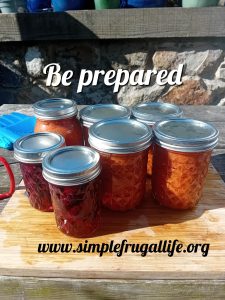
You Don’t Need to Spend a Fortune
This is something I feel strongly about. Emergency preparedness should never become a competition about who has the biggest stockpile. You don’t need expensive survival food or cupboards full of things your family would never normally eat. Start small. One extra tin of baked beans, and maybe a packet of crackers. Another time buy some long-life milk, tinned fish , vegetables, meat, or fruit. It is important to have a few meals that can be eaten cold if necessary.
Most importantly, don’t forget to have some drinking water or have ways to make drinking water safe. Start by aiming for three days of essential supplies, then build up to a week or more if you have the space and can afford it. Rotate your supplies so nothing is wasted. Please don’t put yourself into debt trying to prepare for an emergency. A sensible emergency cupboard should make your life more secure, not create another financial worry.
The Bigger Picture Is What Concerns Me.
It’s not just farming, nor is it just the weather. Even the wars, energy prices, or cyber attacks are not the problem. It is the way all these things are connected. A difficult harvest can reduce production. Higher fuel costs can make growing and transporting food more expensive. International disruption can make imports more costly. A cyber attack can interrupt distribution. House holds already struggling with rising bills may have very little room to cope with another unexpected expense.
Any one of these problems might be manageable on it’s own. When several pressures happen together, they can make life more difficult. It feels more likely even though it doesn’t prove a major emergency is about to happen. The UK has considerable resources and systems designed to manage disruption. However, I for one do not want to rely on someone else to make life run easier. I want the peace of mind to be ready for anything myself.
Our Grandparents Understood Something We’ve Almost Forgotten
There was a time when having a well-stocked pantry wasn’t considered unusual. People kept flour, oats, potatoes, preserved fruit, jars of jam and other basics, even in my life time. They used what they had and replenished it when they could. No one was expecting disaster. They simply knew that circumstances could change. Some one could become ill, laid off, or something could break which would mean an expensive bill.
Today, we have become accustomed to everything being available almost immediately. This convenience isn’t quite the same thing as security. Keeping a few extra essentials at home is one old-fashioned habit I have found is definitely worth bringing back. It has saved me a fortune and brought me peace of mind. I don’t have to visit supermarket regularly either.

I Hope I’m Wrong About the Risks Increasing
I really do. Hopefully or farmers will have good harvests. I have everything crossed that international tensions ease. A miracle might mean that our energy remains affordable, cyber defences hold up, and our supermarket shelves remain full. Nothing would please me more.
However, I am not going to base my household’s preparedness entirely on the hope that everything will always work perfectly. Emergencies don’t always arrive with warning. Sometimes it’s a storm or a power cut. Maybe it is an unexpected loss of income like we had for 5 months this year when Mr S was ill and in hospital. Sometimes it’s something that none of us anticipated.
So Call Me Prepared, Not Paranoid, a Conspiracy Theorist, or Scare Monger.
I know I keep banging on about this but I am not asking anyone to live in fear. It is about asking people to think. Could you feed your family for three days without visiting a shop? Would you have enough drinking water? Could you manage if you couldn’t use your cooker? Do you have a torch, a charged power bank and a way of receiving information? If the answer is no, perhaps it’s worth doing something about it. No one is coming to save us.
Life is unpredictable and always throws curve balls when we least expect them. It will be wonderful if we never need our emergency supplies. We can simply eat and rotate the food as I have been doing for the last few years. I have seen this coming for a while, and will continue to tell people to prepare. Life can change in a moment. Ignore me if you want to. I had people ignore me before the last time there were shortages, but they were often the first to moan about no toilet rolls or flour.. Is your household ready?
Sources and further reading
- UK Government — Prepare for Emergencies
- DEFRA — United Kingdom Food Security Report 2024
- Climate Change Committee — Progress in Adapting to Climate Change, 2025
- National Cyber Security Centre — Annual Review 2025
Other blogs
7 tips for Building a Stock Cupboard
Keeping a full pantry for little money
When the News Feels Frightening this is a little reminder to breathe


Great article Toni. I think exactly like you . I always had a pantry but I slowly adding to it . It came in handy when I was ill and couldn’t drive to the shop or even now when I’m waiting to take my car to the garage. I saw what happend with the cyber attacks. People look at me like I’m nuts but I don’t care. They be the once sitting there with nothing at home and not able to pay with their apple pay when if things go wrong. We all hope it doesn’t but your better to be prepared in an uncertain world.
Good blog Toni. I call you prepared! I remember the power cuts etc in the 70’s when my children were small. Not fun but we managed somehow. Since then (and because of Covid) I like to have a stock of tinned food etc that can be eaten cold. Just one cupboard. It gives me peace of mind.
Thanks for your voice of reason, Toni! I am much more organised with supplies now (still working on it as keep finding random tins I’ve stashed, lol) thanks to your advice. The reminder to know what you have and use/rotate it was especially helpful, as was the reminder that you can buy gradually with small amounts of money. I still have to get a lot of things (only have a tiny torch, etc) but i feel a lot less panicked, and like i have a plan, now.
We have a small stock and will continue to have more. Storage is an issue but I need to tidy up the hall cupboard which in turn will free up some space. Its the kids, as always, that make things tricky but we could manage. I wish they would eat tinned fruit! Good read!
My son says no need to worry here. We could feed the whole village!!! Im well prepared with just about everything. Hopefully it will not happen.
Fantastic blog, 5hank you. My family think I am crazy but I carry on regardless!
Great blog Toni . I have tried having discussions on this but people just think I’m crazy. I am slowly preparing, water is what I’m thinking about now and I need something to cook on. I think it’s a good idea to have some cash on hand too.
I read a lot about how they managed during WW2 and how they coped. I think if there are food shortages the government may introduce rationing. I, like you hope it won’t come to that but being prepared does make you feel little less worried.
As always, a thorough piece of research. Many people are ignoring the signs. Surely the cyber attacks in France and Holland show just what can happen. We cannot assume that extra food can be imported. Other countries are subject to exactly the same pressures as we are in the UK which affects their supplies as well. Who can forget the devastating fires across this country and Europe, this summer? Thousands, if not millions of acres of farmland were destroyed. Make a simple plan of how you will feed your family three meals a day. I mentally worked through the day to see what we would need eg cereal and tinned fruit for breakfast. You don’t need to spend a lot of money, the supermarkets have some very good basic range foods. It’s no good waiting for disaster to happen!
It’s not just the uk asking its people to be prepared…..Ireland, Finland, Sweden, Norway, Denmark , Estonia, Latvia, Lithuania, Germany, Netherlands, France, Belgium, Poland, the Czech Republic either already advise taking steps to be prepared or have issued instructions ( Germany says 10 days)
I went to watch a film yesterday called the people’s emergency briefing yesterday, it’s a film put together by experts to show the effect of climate change on all aspects of life. It has parallels with exactly what you are saying. If you see it being screened in your area I would really recommend going to see it. It was quite shocking to watch but it was positive to see there are solutions. You are definitely not a conspiracy theorist, all these things are real.
Just to be exact, here in The Netherlands it was just one large supermarket chain that was experiencing the cyber attack, but it had serious consequences. The government advices to prepare for 3 days, but several experts have said 8 days is better. There is also talk of supermarkets having more stock than they have now.
I have been prepping or making sure I am prepared (whatever you prefer 😉, I prefer the first) for many years. It is a way of life now. Over the last year people are taking more notice and are more open for advice. Sometimes they still say when the s… hits the fan I am coming to you, but nowadays I tell them you can do the same as we do. We have an agreement with a few family members for them to come here, but we can’t accommodate for everybody.
I enjoy your blog very much!
Aww that is nice of you to say, thanks. I am guessing it was a big chain with that many stores. We have had a couple of supermarkets targeted over the last few years here. Yes I have been expecting all this for about 4 years now and people thought that I was mad. My youngest daughter is a minimalist and will certainly be relying on us. She has actually stopped shaking her head and rolling her eyes at me now since the government offered the advice! Thanks for sharing
As a result of your blog and YouTube videos I’ve been putting items aside in a pantry including water reserves, and like you I rotate stock, use and replenish. We have a reasonable supply of camping lights and batteries and I’m
looking into purchasing a solar powered battery bank that would run the fridge and freezer in the event of a prolonged power outage.
I’ve been looking on the Gov website and it is very useful in highlighting practical strategies including lists and telephone numbers of useful contacts. Having everything in one place would be useful so I will print stuff off and place in a binder.
Thank you Toni for taking the time to share your wisdom, knowledge and skills.
Bless you
Sandra
You are welcome. Well done. It is so important to be prepared. You never know which curve ball is going to come your way.
This article and the links are very helpful, thank you. I really like ypur other blog about stocking up on limited money. I now have a list, which is prioritised. I only think about the next affordable thing, and don’t do it until i have the money. It’s helped me not worry about everything at once.
Thank you.